Food Safety in Pre-prepared Meals: UK Guidelines
The UK Food Standards Agency (FSA) provides evidence-based guidance on safe food storage and preparation. These guidelines apply to all prepared food, whether prepared at home or commercially. Understanding these guidelines is essential for safe batch preparation.
Temperature Zones and Food Safety
Temperature control is the primary mechanism through which food safety is maintained. Different temperature ranges support different rates of bacterial growth and preservation mechanisms.
Room Temperature (15–25°C)
At room temperature, prepared foods should not be left for extended periods. The FSA guidelines recommend that prepared food be refrigerated or frozen within 2 hours of cooking, or within 1 hour if the room temperature is above 20°C. Room temperature represents a danger zone for bacteria growth if food is left unattended.
Refrigerator Temperature (0–4°C)
At refrigeration temperature, bacterial growth slows significantly but does not stop. This is the standard zone for short-term food storage. Most prepared foods remain safe for 3–4 days under refrigeration. This applies to cooked proteins, vegetables, grains, and prepared sauces.
Freezer Temperature (-18°C or Lower)
At freezer temperature, bacterial growth effectively stops. Most prepared foods can be frozen for 3–4 months safely, though quality may change after this time. Some components may remain safe indefinitely when frozen, though texture and flavour changes become more apparent with extended storage.
Cooling Prepared Food
After cooking, hot food must be cooled before refrigeration. This serves two purposes: it prevents the hot food from raising the temperature of the refrigerator, and it allows food to be handled safely.
Rapid Cooling Methods
Hot food can be cooled rapidly by placing containers in an ice bath (a large bowl filled with water and ice). Spreading hot food across shallow containers rather than deep containers speeds cooling. For large quantities, dividing into smaller portions accelerates the cooling process.
Raw to Cooked: Preventing Cross-Contamination
Cross-contamination occurs when bacteria from raw foods contact cooked foods or ready-to-eat foods. This is a primary food safety concern.
Storage Organisation
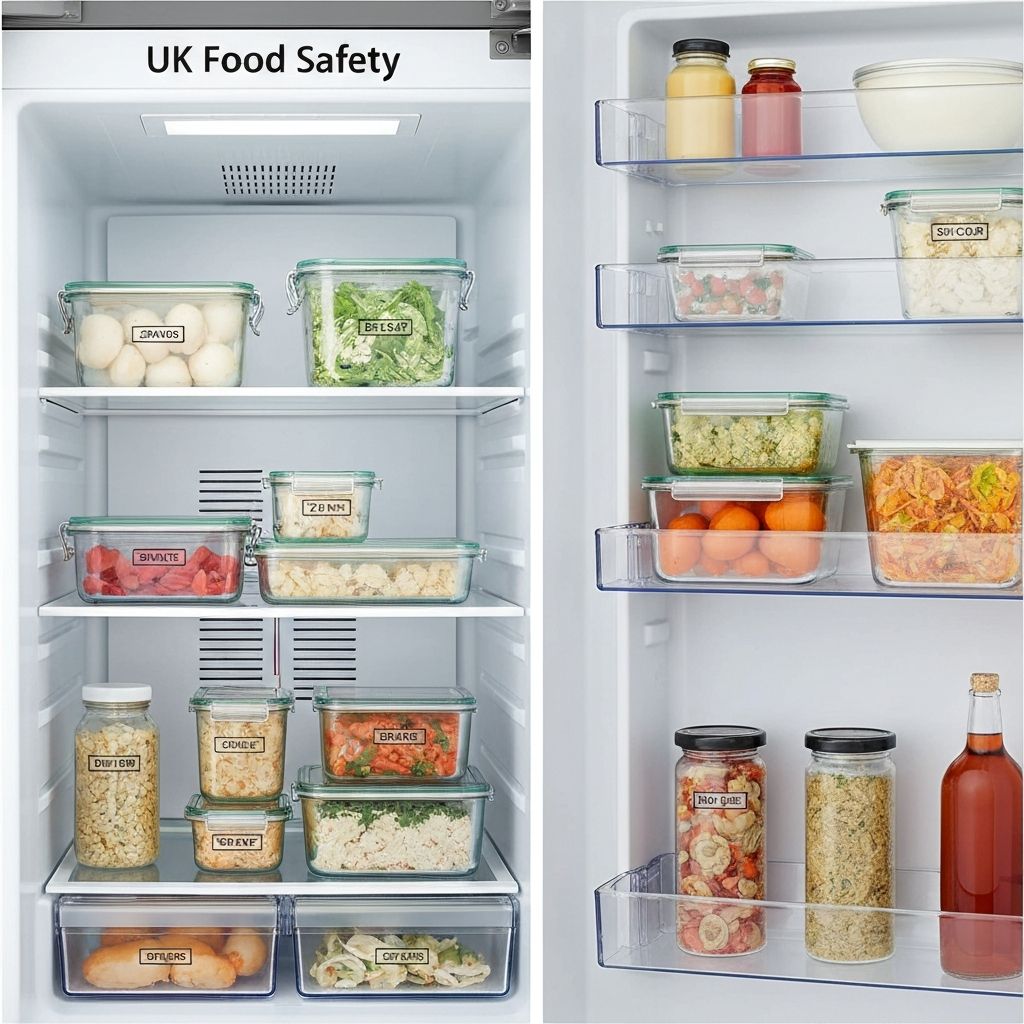
In a refrigerator, raw proteins should be stored on lower shelves with ready-to-eat foods and cooked foods on upper shelves. This prevents dripping of raw meat juices onto cooked foods. Separate cutting boards and utensils for raw and cooked foods prevent cross-contamination during preparation.
Hand Hygiene
Washing hands after handling raw foods and before handling ready-to-eat foods is essential for preventing cross-contamination. This is particularly important when handling raw poultry.
Specific Foods and Storage Times
| Food Category | Cooking Requirements | Refrigerator Storage | Freezer Storage |
|---|---|---|---|
| Cooked Poultry | 75°C internal temperature | 3–4 days | 3–4 months |
| Cooked Red Meat | Varies by cut; minimum 63°C | 3–4 days | 3–4 months |
| Cooked Pork | 71°C internal temperature | 3–4 days | 3–4 months |
| Cooked Fish and Shellfish | 63°C internal temperature | 3–4 days | 3–4 months |
| Cooked Vegetables | Heat through completely | 3–4 days | 3–4 months |
| Cooked Grains | Heat through completely | 3–4 days | 3–4 months |
| Cooked Legumes | Heat through completely | 3–4 days | 3–4 months |
Checking Refrigerator Temperature
Accurate refrigerator temperature is essential for food safety. A simple refrigerator thermometer placed on a shelf (not in a door, which experiences temperature fluctuations) can confirm temperature. The FSA recommends checking refrigerator temperature periodically to ensure it remains at or below 4°C.
Labelling and Tracking Storage Times
Labelling prepared food with the date it was prepared allows for tracking of storage duration. A simple date written on a container label in marker or permanent pen is sufficient. This is particularly important when storing multiple batches of the same food item, to ensure oldest items are used first.