Portion Control and Container Storage Systems
The practical implementation of batch cooking depends significantly on how prepared components are portioned and stored. Container selection, portion size decisions, and refrigerator and freezer organisation all influence the usability of prepared foods.
Container Materials and Selection
Glass Containers
Glass containers are impermeable to air and resistant to staining and odour absorption. They withstand repeated heating and cooling cycles well. The primary disadvantages are weight and fragility. Glass containers are typically heavier than plastic and can break if dropped.
Plastic Containers
Plastic containers are lightweight and durable. They are less likely to break with handling compared to glass. The primary concern with plastic containers is that some plastics may absorb odours from strong-smelling foods (particularly oils and spices). Prolonged storage of acidic foods in some plastics may cause staining.
For long-term freezing, plastic containers may become brittle at very low temperatures, though this is not typically a practical concern in household freezers. Repeated heating in microwave ovens may shorten the lifespan of some plastics.
Container Size Selection
Container size depends on intended use. Smaller containers (250–400ml) are suitable for individual meal portions. Larger containers (1–2 litres) are suitable for storing bulk components that will be used across multiple days. Many batch preparation systems use a combination of sizes.
Portioning Strategies
Individual Portion Sizes
Individual portions (typically 250–400ml) are convenient for removing from storage and using directly. This is the most practical approach for people who want ready-to-eat meals. The disadvantage is that it requires more containers and storage space.
Bulk Component Storage
Storing components in larger quantities (1–2 litre containers) allows for flexibility in use. A container of cooked rice can be portioned fresh each time it is used, allowing different portion sizes depending on immediate need. This approach requires less storage space but less convenience for ready-to-use meals.
Hybrid Approach
Many batch preparation systems use a combination: some components are portioned into individual meal containers, while other components (such as rice, lentils, or stock) are stored in bulk. This balances convenience with flexibility.
Refrigerator Organisation
Temperature Zones Within Refrigerators
The temperature within a refrigerator varies. The coldest area is typically at the back and bottom, where the cooling element is located. Warmer areas are near the door, which is exposed to room temperature each time it is opened. The shelves themselves have more consistent temperature than the door.
Visibility and Access
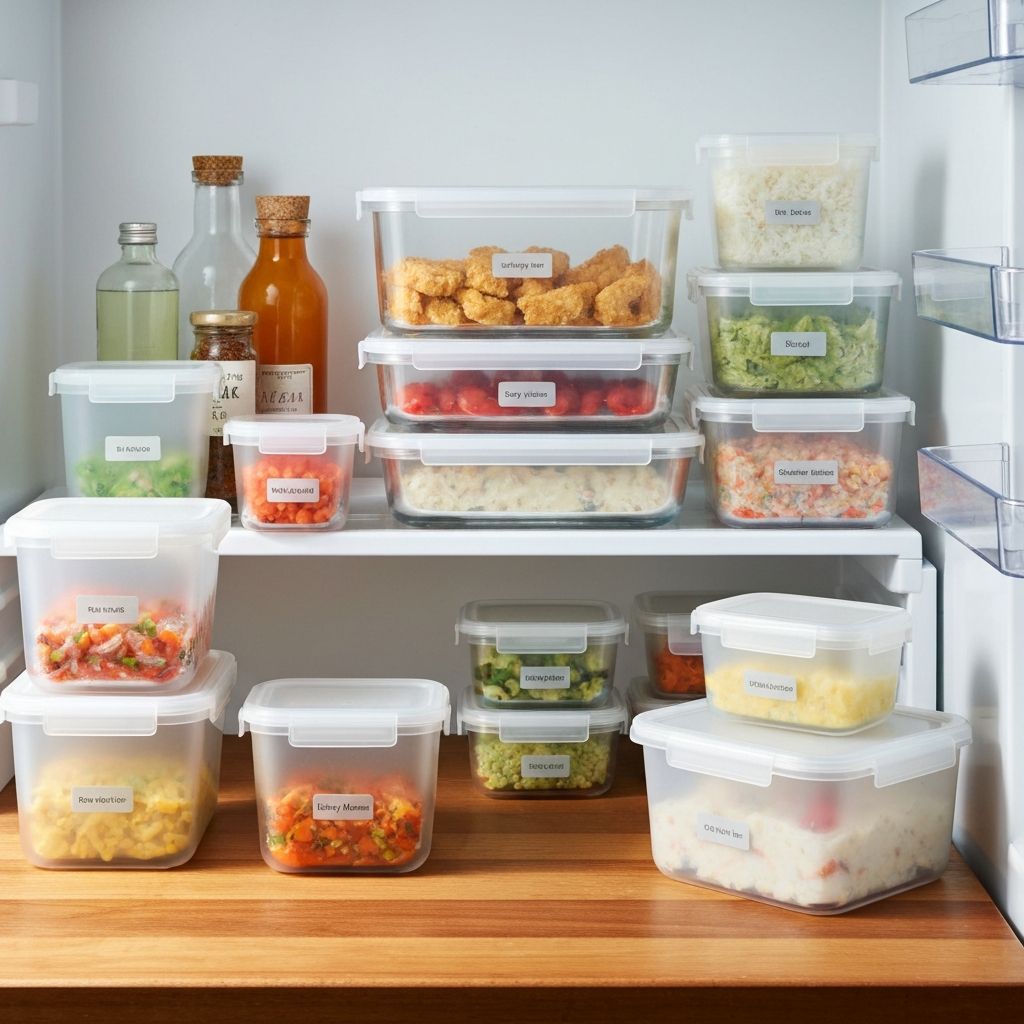
Labelled containers stored with labels visible make it easy to identify what is available. Some people arrange containers with oldest items at front and newer items at back, ensuring older items are used first. A simple notebook listing prepared items and their storage dates can help track inventory.
Freezer Organisation
Container Types for Freezing
Flat plastic containers or freezer bags allow efficient use of freezer space. Stacking flat frozen containers uses vertical space efficiently. Labelling containers with contents and date is essential, as frozen items can be difficult to identify without labels.
Portioning for Freezing
Portion sizes for freezing can be larger than for refrigerated storage, as frozen items do not require daily removal. Some systems use flat freezer bags for grains or legumes, laying them flat to freeze, then breaking into portions as needed. This uses minimal space.
Freezer Space Limitations
Freezer space is typically more limited than refrigerator space in household kitchens. The quantity of components that can be batch-prepared is therefore limited by available freezer capacity. Planning batch preparation quantities according to available freezer space is a practical consideration.
Thawing and Reheating
Refrigerator Thawing
The safest method for thawing frozen prepared foods is in the refrigerator. Food should be moved from freezer to refrigerator 24 hours before use, allowing gradual thawing. After thawing, food should be used within 1–2 days if not immediately reheated.
Direct Reheating
Frozen prepared components can be reheated directly without thawing, using gentle heat. Stovetop reheating at low temperature for extended periods prevents burning. Microwave reheating may result in uneven heating.
Texture Considerations
Some components experience texture changes when frozen and thawed. Vegetables may become softer. Sauces may separate. Grains may become less fluffy. These are normal consequences of freezing and do not indicate spoilage, though they may affect eating experience.
Labelling System
A simple labelling system improves usability of prepared foods. Essential information includes the contents of the container and the date it was prepared. Additional information might include portion size or reheating instructions.
| Label Information | Purpose | Example |
|---|---|---|
| Contents | Identify what is in the container | "Roasted Vegetables" |
| Date Prepared | Track storage duration for food safety | "2026-02-05" |
| Portion Size (optional) | Clarify amount in container | "400ml" or "1 serving" |
| Reheating Instructions (optional) | Provide guidance on reheating | "Reheat on stovetop 5 minutes" |